Welcoming Everyone: A Case Study in Tourism Website Accessibility
The other morning, I took a long walk down Colorado Boulevard in Old Pasadena before heading into the office. The morning fog was just starting to lift off the San Gabriel Mountains, and I stopped to watch the staff at one of our beautiful historic hotels prepare for the day. A doorman was holding open the heavy glass doors with a warm smile, making sure a guest with a walker could glide right into the lobby. It got me thinking about tourism website accessibility and how that very same spirit of hospitality needs to start long before a guest ever sets foot in our lovely city.
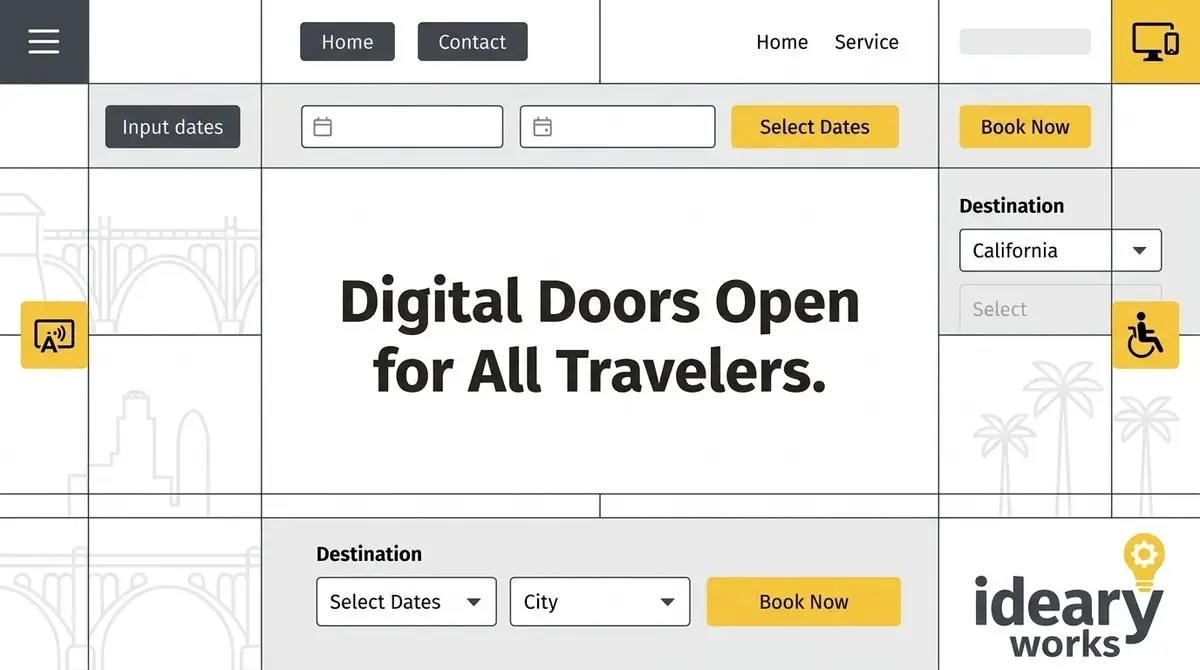
When I talk about welcoming visitors to Southern California, I usually hear local business owners focus on the physical experience of plush robes, valet parking, and perfectly swept walkways. However, a traveler’s journey truly begins the moment they try to book a room or buy a ticket online. If your digital booking engine is confusing or impossible to navigate for a neighbor using a screen reader, it is exactly like locking that beautiful glass lobby door. Today, I want to share a few stories about how local hotels and attractions are completely transforming their digital front doors to be just as inviting as their physical ones.
Why Tourism Website Accessibility Matters for SoCal Hospitality
Down by the Playhouse Village, we have so many delightful theaters and boutique hotels that thrive on offering a deeply personal experience. I always remind local owners that their website is simply an extension of that neighborhood charm. When a booking calendar requires a tiny mouse click to select a date, it immediately excludes anyone relying on a keyboard to navigate due to a motor impairment. Fixing these small digital barriers is an act of profound neighborly care that shows your guests you value their comfort from the very first interaction.
I recently looked at a major overhaul done by a prominent Southern California coastal resort that realized their online reservations were inadvertently turning away guests. Their old system relied on color-coded availability calendars, which meant a visitor with visual impairments or color blindness could not tell which dates were open. By simply adding clear text labels and ensuring their booking widget could be read aloud by assistive technology, they opened their digital doors to thousands of travelers. It was a beautiful example of extending genuine hospitality into the digital space.
Fixing the Booking Engine: A Motor Impairment Case Study
Not too far from my office on South Lake Avenue, another local attraction recently undertook a massive redesign of their ticketing platform. Their previous system featured a cascading dropdown menu that required precise mouse movements to select different tour packages. For a guest with a motor impairment, trying to keep the mouse perfectly steady while navigating three layers of menus was a frustrating and exhausting ordeal. The attraction decided to step back and rethink the entire process through the lens of human kindness.
They replaced the tricky dropdowns with large, easy-to-select buttons that a user could tab through using only their keyboard. Furthermore, they increased the size of the clickable areas, making it much easier for someone using a touchscreen or alternative input device to secure their tickets. The result was not just a more accessible website, but a significantly smoother booking experience for every single visitor, whether they were using a specialized keyboard or simply booking on a mobile phone while waiting for a coffee at Pasadena Commons.
Opening Up Visual Navigation for Hotel Guests
Another incredible transformation happened at a bustling Los Angeles County hotel that caters to international tourists and local staycationers alike. Their original website featured gorgeous, high-resolution images of their suites, but they completely forgot to include descriptive text for those images. A prospective guest relying on a screen reader would only hear an unhelpful file name read aloud, leaving them with no idea if the room had a cozy fireplace or a balcony overlooking the city. It was the digital equivalent of handing a guest a blank brochure.
The hotel’s team methodically went through their entire property gallery and added rich, descriptive background text to every photo and booking option. They also updated the contrast of their typography, ensuring that the light gray text on a white background was darkened to be easily readable by folks with low vision. These thoughtful adjustments proved that creating an inclusive environment does not mean sacrificing beautiful design. If you want to see how your own property measures up, I would love for you to request a personalized digital review from my desk.
Funding Your Digital Hospitality Upgrades
One of the most common things I hear from local bed and breakfast owners is a quiet worry about the cost of making these necessary digital upgrades. I always love sharing the good news about the IRS Section 44 Disabled Access Credit, which is designed specifically to help small businesses offset the cost of improving accessibility. This credit can be applied directly to the expenses of upgrading your website, meaning you can do the right thing for your guests while also making a smart financial decision for your business. It is a wonderful resource that essentially rewards you for being a better host.
Taking advantage of this tax credit allows you to reinvest in your community and ensure your digital welcome mat is rolled out for everyone. You do not need to navigate the complexities of digital standards alone, because I am always right here in the neighborhood to help translate the technical details into simple, actionable steps. Whether you need to fix a broken contact form or rebuild your booking engine from the ground up, you can start a conversation with me today to map out a clear path forward.
Bringing It All Back to the Neighborhood
Whenever I walk past the bustling shops and cafes of our city, I am reminded that true hospitality is about anticipating needs before they are ever voiced. Your website should reflect the exact same warmth and attention to detail that your front desk staff provides every single day. By prioritizing accessibility in your booking systems, you are sending a clear message that every traveler is a valued member of your extended community. I firmly believe that when we make the digital world easier to navigate, we make our physical world more welcoming, too.
If you are ready to ensure your online presence is as inviting as your physical storefront, I am just a quick message away. I spend my days helping local businesses turn their digital barriers into open doors, and I would be honored to do the same for you. Please feel free to claim your complimentary accessibility roadmap whenever you are ready to take that first step. Together, we can make Southern California the most welcoming destination on the web.
Frequently Asked Questions About Accessible Booking
What does an accessible booking engine actually look like?
An accessible booking engine is simply one that anyone can use, regardless of how they navigate the internet. It means a guest can select dates using just their keyboard, and a screen reader can clearly announce room types and prices. It feels exactly like a smooth, effortless conversation between your business and your future guest.
Can I keep my current website design while making these changes?
Absolutely, because being inclusive does not mean your website has to look boring or clinical. In most cases, the structural changes happen behind the scenes in the coding, while visible changes like better color contrast only enhance your existing branding. We can easily weave these thoughtful updates right into the beautiful design you already have.
How do I know if my reservation system is currently turning people away?
The easiest way to find out is to try booking a room on your own site without using your mouse. If you get stuck trying to open the calendar or submit the payment form, your guests with motor or visual impairments are likely getting stuck there, too. I am always happy to help you spot these invisible hurdles.
Does fixing my website help people find my business on search engines?
It certainly does, because search engines love websites that are clearly organized and easy to read. When you add descriptive text to your images and organize your headings properly for accessibility, you are also giving search engines exactly what they need to understand your content. It is a beautiful win-win for your neighborhood visibility and your guest experience.