Strategic Legacy WordPress Remediation Planning
The imperative for legacy WordPress remediation goes far beyond cosmetic updates, demanding rigorous structural engineering to align outdated codebases with current accessibility standards. As state and federal mandates tighten, we must approach website compliance with the analytical precision required of any modern architectural project. Relying on outdated templates or automated patches leaves organizations vulnerable to significant legal and financial liabilities. We engineer solutions that translate raw technical requirements into seamless experiences for all users.
Table of Contents
Navigating the complexities of digital accessibility requires a structured understanding of both the legal mandates and the technical solutions. The following sections outline our methodical approach to auditing, refactoring, and maintaining code-level compliance. Review the topics below to understand how structural integrity mitigates litigation risks.
- The Legal Framework and Litigation Context
- Auditing the Document Object Model
- Dismantling the Automated Overlays
- Legacy WordPress Remediation Steps
- Refactoring Custom Plugins
- Phased Processes for Compliance
- Testing Keyboard Navigation
- Frequently Asked Questions
The Legal Framework and Litigation
The 2026 Department of Justice Title II updates establish uncompromising technical benchmarks for public entities, while private businesses face relentless surges in Unruh Civil Rights Act litigation across California. Legacy WordPress websites are particularly susceptible to these lawsuits because their foundational code often lacks the semantic rigor required by WCAG 2.1 and 2.2 AA standards. Judges increasingly reject mootness dismissals when businesses rely on superficial automated fixes that fail to fundamentally alter the underlying DOM structure. Proactive website modernization serves as the most reliable defense against these legal threats. Furthermore, businesses can leverage the IRS Section 44 Disabled Access Credit to offset compliance costs while securing their digital infrastructure.
Auditing the Document Object Model
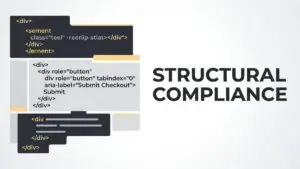
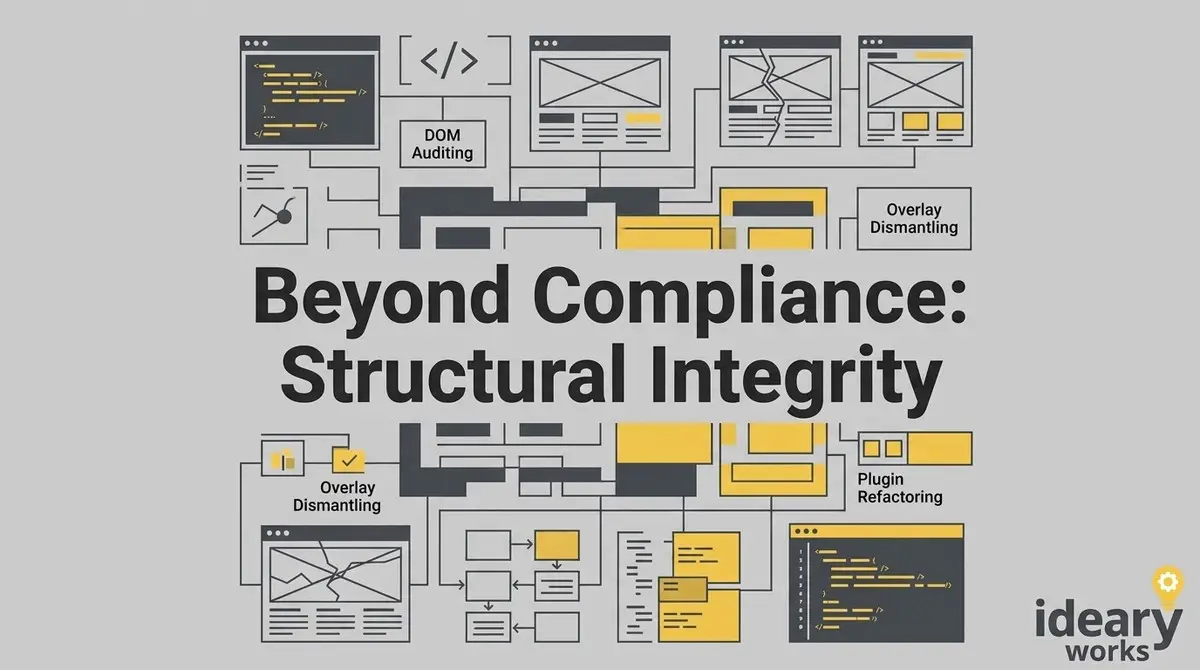
The core failure of older WordPress themes lies in their overreliance on generic container elements rather than structurally meaningful semantic HTML. When we analyze these legacy systems, we consistently find navigation menus and interactive forms constructed from non-descript tags that provide zero contextual data to assistive technologies. Screen readers rely entirely on a properly structured Document Object Model to interpret the hierarchy and functionality of a given page. By auditing the raw DOM structure, we identify the exact nodes where missing ARIA labels or incorrect focus management create insurmountable barriers for keyboard navigation users.
Dismantling the Automated Overlays
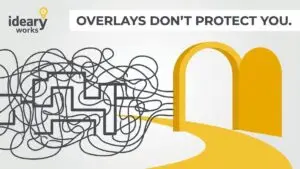
Many organizations mistakenly deploy automated accessibility overlays in the false belief that these one-click plugins provide a shortcut to comprehensive legal compliance. These tools are structural liabilities that dynamically inject scripts over a broken foundation, ultimately failing to correct the core accessibility violations within the source code. Overlays cannot accurately interpret the nuanced visual context of complex images or automatically repair deep-seated keyboard trapping issues present in legacy environments. True compliance requires manual intervention at the template level to ensure that the structural engineering of the website meets stringent WCAG criteria without relying on fragile JavaScript workarounds.
Legacy WordPress Remediation Steps
Executing a successful legacy WordPress remediation requires a methodical approach that addresses the DOM at a foundational level. We begin by stripping away deprecated code and replacing it with semantic elements like header, main, nav, and footer tags to establish clear programmatic landmarks. This specific transformation dictates the behavior of screen readers, allowing users to bypass repetitive content and navigate directly to the primary information they seek. We meticulously restructure form inputs to ensure explicit label associations, which is a critical requirement for WCAG 2.1 AA validation and flawless assistive technology interaction.
Implementing ARIA and Semantic Tags
Consider the typical legacy WordPress search bar, which frequently lacks both visual and programmatic indicators of its fundamental purpose. Our remediation protocol involves rebuilding this component using standard semantic HTML wrapped in appropriate ARIA roles to broadcast its function to screen reading software. We implement specific attributes, such as aria-expanded for dropdown menus and aria-describedby for complex form validations, bridging the gap between static code and interactive user experience. These structural enhancements provide a robust, long-term solution that withstands rigorous automated and manual accessibility testing protocols.
Addressing WCAG Target Size and Focus
The introduction of WCAG 2.2 AA standards brought new structural requirements regarding interactive target sizes and focus state visibility that many legacy themes fail by default. Our engineering process expands click areas to meet the minimum 24-by-24 pixel requirement, ensuring users with motor impairments can interact with the interface reliably. We also rewrite the CSS rules governing focus indicators to guarantee that keyboard users always have a highly visible, high-contrast outline tracking their location within the DOM. Upgrading these specific aesthetic and structural properties is vital for achieving comprehensive ADA compliance and optimizing the general user experience.
Refactoring Custom Plugins
Beyond the core theme files, legacy WordPress sites frequently rely on outdated plugins and custom post types that inject inaccessible code directly into the rendering pipeline. We systematically audit the output of every active plugin to identify severe structural violations, such as missing table headers in data grids or inaccessible modal dialogues. When a third-party extension fails to meet our rigorous engineering standards, we either author custom functionality to replace it or implement targeted PHP filters to sanitize the generated HTML. This granular level of technical oversight prevents external code from compromising the overall structural integrity of the remediated website.
Phased Processes for Compliance
We organize our remediation projects into discrete, data-driven phases to ensure continuous operational stability while we upgrade the underlying architecture. The initial phase isolates critical structural failures, prioritizing high-traffic pathways and interactive components that present the greatest immediate Unruh Act litigation risk. Subsequent phases address localized content issues, optimizing color contrast ratios and integrating precise alternative text protocols for all media assets. This systematic execution guarantees that the final product adheres to the exacting standards of German precision, resulting in a fundamentally accessible digital ecosystem.
Testing Keyboard Navigation
Structural code modifications mean nothing without empirical validation through native assistive technologies and rigorous keyboard testing. We test our DOM adjustments against industry-standard screen readers like JAWS and NVDA to ensure that our semantic hierarchy correctly translates into an intuitive auditory experience. Engineers manually traverse every interactive element using only the tab key, verifying that no keyboard traps exist and that the logical focus order mirrors the visual layout. These exhaustive testing protocols transform theoretical compliance into a verified reality, ensuring that the engineering holds up under legal scrutiny.
Frequently Asked Questions
We encounter recurring technical inquiries regarding the viability and mechanics of retrofitting outdated content management systems. The structural methodologies we employ prompt questions about the intersection of legacy code, modern web standards, and prevailing civil rights legislation. The following answers clarify our data-driven approach to achieving absolute DOM integrity.
Why do older themes fail WCAG?
Older themes were designed prior to the strict enforcement of WCAG 2.1 AA guidelines, often utilizing inaccessible structural patterns to achieve complex visual layouts. These legacy templates prioritize aesthetics over semantic DOM hierarchy, utilizing generic container blocks that result in significant barriers for keyboard-only navigation. We must manually refactor the underlying PHP and HTML output to achieve true, demonstrable compliance for assistive technologies.
Can automated plugins fix my site?
Automated overlays merely mask underlying code deficiencies and frequently introduce new accessibility barriers for native screen reader users by interfering with built-in accessibility APIs. They fail to alter the static DOM structure, leaving the organization heavily exposed to Unruh Civil Rights Act litigation and predatory demand letters. Only structural engineering at the source code level provides legitimate compliance that satisfies judicial standards.
How does IRS Section 44 support us?
The IRS Section 44 Disabled Access Credit allows eligible small businesses to claim a substantial tax credit for direct expenditures related to making their digital operations accessible. This powerful financial mechanism helps offset the costs of comprehensive technical audits and necessary code refactoring. We integrate this economic reality into our strategic planning to maximize client value while simultaneously reducing legal exposure.
Secure Your Digital Infrastructure
The transition from a non-compliant legacy system to a robust, accessible platform demands rigorous technical expertise and an uncompromising commitment to structural integrity. As the legal landscape continues to penalize superficial compliance efforts, organizations must invest in foundational code enhancements that genuinely serve all users. We invite you to secure your digital assets and eliminate legal exposure by partnering with our technical leadership. You can claim a comprehensive structural review today to initiate your strategic roadmap toward full technical compliance. Let us help you align your outdated systems with modern standards through our specialized website remediation services.