Cost of Digital Accessibility Lawsuits in California
Imagine a prospective patient in Pasadena attempting to schedule an urgent consultation on a local medical clinic website using a screen reader. The user navigates to the booking form, only to find that the input fields lack proper descriptive labels. Because the underlying code fails to communicate what information is required, the patient cannot complete the appointment request and is forced to abandon the process entirely. This frustrating experience is exactly how many digital accessibility lawsuits originate in California.
Understanding Digital Accessibility Lawsuits
The legal landscape in Southern California has shifted dramatically over the past few years regarding website compliance. California state law, specifically the Unruh Civil Rights Act, provides a powerful mechanism to enforce the Americans with Disabilities Act in digital spaces. Under this legislation, plaintiffs can claim minimum statutory damages of four thousand dollars per access violation encountered during a visit. This means that a poorly coded navigation menu or an unlabelled image is a direct and immediate liability. Business owners must recognize that digital accessibility lawsuits reflect a profound failure to serve the entire community.
When websites exclude individuals through poor structural design, they invite scrutiny from legal professionals who specialize in identifying these exact failures. When a demand letter arrives at a business, the financial meter begins running immediately. The initial costs involve hiring specialized legal counsel to interpret the claims and negotiate with the opposing party. Settlements for these types of cases typically range between ten thousand and thirty thousand dollars, but that figure only represents the plaintiff compensation.
Financial Reality of Legal Defenses
In California, plaintiffs have the unique ability to file claims in both state and federal courts, which severely complicates the defense strategy. State court filings under the Unruh Act are particularly damaging because they often bypass the more stringent federal requirements for standing. This dual-threat environment forces businesses to hire attorneys who are well-versed in both jurisdictions, thereby multiplying the hourly billing rates. For a small medical practice in Pasadena, these combined legal fees can quickly devour an entire quarterly operating budget. The most frustrating aspect of this process is that the money spent on defense lawyers does absolutely nothing to improve the actual website experience for disabled users.
Defendants must also factor in their own attorney fees, the mandatory costs of retrofitting the website, and the potential loss of revenue during the remediation process. Ultimately, the true expense of ignoring web accessibility far exceeds the initial investment required to build a compliant digital infrastructure. Ignoring this reality is a dangerous financial gamble for any enterprise operating within the state. A proactive approach is the only way to safeguard your company assets.
Why Automated Overlays Increase Liability
Many business owners seek out quick fixes to mitigate their legal exposure, often turning to one-click accessibility widgets or automated overlays. These products promise instant compliance by injecting a layer of code over the existing website structure. However, these shortcuts frequently fail to address the core barriers that real users face and can sometimes create entirely new navigation problems. Relying on an automated overlay is a disservice to both the end user and the business, as these tools cannot interpret context or fix deeply rooted structural issues.
In the eyes of the law and the end user, these superficial additions offer a false sense of security and leave the business fully exposed to litigation. To understand the failure of automated solutions, we must look closely at how assistive technologies interact with web content on a technical level. Screen readers rely entirely on the native Document Object Model of a webpage to interpret information accurately for the user. When an overlay attempts to dynamically guess the purpose of a button or a form field, it often guesses incorrectly, providing confusing or entirely false feedback.
Danger of Ignoring Structural Code
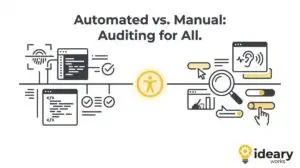
For instance, if a visually impaired user is trying to read a restaurant menu, an overlay might skip over nested pricing tables entirely because it cannot parse complex structure. A manual, code-level audit is the absolute only reliable method to ensure that semantic structure and ARIA roles are applied appropriately. Shortcuts only create frustration, whereas manual coding guarantees that the user receives the correct information at all times. Real compliance demands an authentic commitment to fixing the native codebase.
Translating Standards to User Needs
Achieving true compliance requires a deep understanding of the Web Content Accessibility Guidelines, specifically the WCAG 2.2 AA standard. While the terminology might seem dense to business owners, the core principles are fundamentally about creating a predictable and operable environment for all visitors. For example, the requirement for clear focus indicators ensures that keyboard-only users can see exactly which link or button they are currently interacting with on the page. Without these visible outlines, navigating a dense real estate listing or a retail catalog becomes an impossible guessing game for someone who cannot use a mouse.
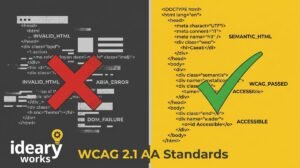
Furthermore, ensuring sufficient color contrast between text and background elements is critical for users with low vision. These standards translate directly into native structural code fixes that benefit the end user immensely. A major culprit behind these barriers is the overuse of generic HTML tags, commonly referred to as div soup among developers. When a website relies solely on meaningless container elements instead of semantic tags like header, main, and footer, assistive technologies lose their ability to understand the page layout.
Implementing Meaningful Keyboard Access
A visually impaired user relying on a screen reader uses these semantic landmarks to jump directly to the main content or navigation menu. Without this foundational structure, the user is forced to listen to every single element on the page in a linear, exhausting sequence. Rebuilding the layout with proper semantic HTML is a crucial step in delivering a fast, accessible, and user-centric experience. Addressing keyboard accessibility involves a methodical review of the website interactive elements.
Every dropdown menu, modal window, and submission form must be reachable and operable without the use of a mouse. Developers must ensure that focus states are visually distinct and that the navigation order follows a logical, sequential path through the content. By systematically repairing these code-level interactions, a business dramatically improves the user experience while simultaneously dismantling the foundation of most accessibility claims. Good code is inherently inclusive code.
Customer Trust and Structural Integrity
The conversation around web accessibility must move beyond the fear of legal repercussions and focus heavily on the inherent value of digital inclusion. A website built with clean, accessible code is inherently faster, easier to maintain, and significantly more optimized for search engine algorithms. When a local Los Angeles retail brand prioritizes accessibility, they are sending a clear, undeniable message that they value every single customer equally. This commitment fosters long-term customer trust and dramatically expands the potential market reach of the business.
Functionality and inclusion are the true markers of a professionally crafted digital presence. By treating accessibility as a core component of web design rather than an afterthought, companies build stronger relationships with their community. It is a tangible demonstration of corporate responsibility that resonates deeply with modern consumers. When your platform works seamlessly for everyone, your brand reputation naturally strengthens.
Offsetting Costs with Tax Incentives
Investing in a robust digital foundation does not have to be a purely out-of-pocket expense for small businesses. The federal government offers financial support through the IRS Section 44 Disabled Access Credit, which is designed to help companies cover the costs of improving accessibility. This credit can be applied to the expenses associated with manual code audits, professional remediation, and ongoing compliance maintenance. By utilizing this incentive, business owners can significantly reduce their financial burden while making critical upgrades to their digital infrastructure.
It is a strategic financial move that protects the company and serves the community simultaneously. Taking advantage of these tax benefits allows you to allocate resources effectively while achieving full WCAG compliance. Many business owners remain entirely unaware of these provisions, leaving valuable financial assistance on the table. We strongly recommend consulting with a tax professional to maximize the value of this credit for your specific situation.
Building a Long Term Compliance Strategy
Accessibility is an ongoing commitment rather than a one-time project to be checked off a list. As websites evolve with new content, features, and marketing campaigns, the underlying code must be continuously monitored for new barriers. A precision-driven approach requires regular manual audits to ensure that the digital structural integrity remains intact over time. Businesses in Southern California need a partner who understands the nuances of native coding and the real-world impact of accessibility errors.
Partnering for Lasting Digital Inclusion
At Ideary Works LLC, we believe that education and craftsmanship are the keys to a secure and welcoming web presence. We translate complex technical requirements into straightforward, actionable improvements that protect your business and empower your users. Rather than relying on temporary patches, we focus on native structural code fixes that provide lasting value. We invite you to get my free website audit to understand exactly where your website currently stands.
Conclusion on Digital Structural Health
The financial and reputational risks associated with ignoring web accessibility are too severe to dismiss. By taking a proactive, code-level approach to compliance, businesses can avoid the draining costs of litigation and build a platform that truly serves everyone. Precision in web development creates an inclusive digital landscape where every user can navigate, read, and transact with complete independence. If you are ready to secure your digital assets, you can test my website with our team of dedicated experts.