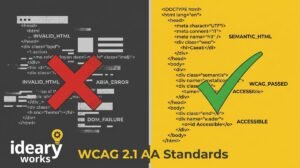
E-commerce Checkout Accessibility Remediation Case Study
Imagine a customer who has spent twenty minutes carefully selecting items from your online store. They proceed to the cart, ready to complete their purchase, only to find that their screen reader cannot identify the credit card input fields. This frustrating scenario happens daily on websites that ignore proper code structure. Investing in checkout accessibility remediation is the only reliable way to ensure these eager buyers can actually finalize their transactions.
When a digital storefront builds barriers at the most critical stage of the buyer journey, the business loses revenue and customer trust. Shoppers using assistive technologies require clear, semantically structured forms to navigate the payment process independently. A broken checkout experience forces these users to abandon their carts and seek out competitors who prioritize inclusive design. Fixing these underlying code issues is an investment in long-term customer loyalty and sustainable business growth.
Many merchants mistakenly believe that digital compliance is merely a legal checkbox to avoid litigation. In reality, accessible web design directly correlates with higher conversion rates and improved usability for all visitors. By addressing fundamental flaws in the payment gateway, companies open their doors to a wider, more diverse audience. We see this consistently across our projects here in Pasadena and throughout Southern California.
Understanding Checkout Accessibility Remediation
To grasp the impact of checkout accessibility remediation, we must first look at what goes wrong in standard digital shopping carts. Modern e-commerce platforms often rely on complex JavaScript frameworks that dynamically update the page content. If these dynamic changes are not communicated to assistive technologies via proper ARIA roles, a blind user might not realize their item was successfully added to the cart. This lack of feedback instantly creates confusion and breaks the purchasing momentum.
Furthermore, many custom payment forms prioritize visual aesthetics over structural HTML semantics. A designer might remove standard form labels in favor of placeholder text to achieve a minimalist look. However, placeholder text frequently disappears once a user starts typing, leaving those with cognitive or memory disabilities unsure of what data belongs in which field. True remediation requires restoring these native structural elements so that the form is universally understandable.
When our agency approaches a digital audit, we analyze these exact friction points at the code level. We do not rely on superficial scans; we manually test the purchasing flow using the same screen readers and keyboard techniques that real customers use. This methodical evaluation reveals the hidden roadblocks that automated testing tools routinely miss. The resulting structural fixes provide a seamless, robust experience that benefits every shopper who visits the site.
The Illusion of Automated Accessibility Widgets
A troubling trend in the web development industry is the reliance on one-click accessibility widgets and automated overlays. These products are frequently marketed as instant magic solutions that will instantly cure a website of all compliance issues. In practice, these tools often fail to correct the underlying structural code, leaving the core barriers intact. A widget cannot magically repair a poorly coded checkout form or create missing logical relationships between payment elements.
More importantly, these overlays frequently interfere with the very assistive technologies they claim to support. Screen reader users often find that widgets hijack their customized browsing settings, making the website harder to use than it was originally. Offering a shortcut solution rather than fixing the native code does a massive disservice to both your users and your business reputation. True inclusion requires craftsmanship and a commitment to maintaining your digital structural integrity.
Instead of relying on automated band-aids, responsible businesses must invest in manual, code-level remediation. This approach ensures that the website inherently supports all users without requiring them to activate special toolbars or modes. By building accessibility directly into the foundation of your digital storefront, you create a robust platform that withstands browser updates and evolving technology standards. This steady, reliable strategy is the hallmark of genuine technical expertise and customer care.
Translating Technical Standards to Human Impact
The WCAG 2.2 AA standards provide a precise framework for creating inclusive digital environments. While these guidelines can seem incredibly technical to the average business owner, they translate directly to practical human experiences. For example, WCAG requires that all user interface components be operable through a keyboard interface without requiring specific timings. In human terms, this means a customer with motor impairments can navigate your checkout using only the Tab key, taking as much time as they need to enter their shipping details.
Another critical standard involves color contrast and visual presentation. If an error message appears in light red text on a white background, a user with low vision will likely struggle to read it. When a customer enters an invalid zip code, the system must clearly and visibly indicate exactly where the error occurred and how to fix it. We resolve this by ensuring error states are announced by screen readers and visually distinct, providing clear instructions for recovery.
Focus management is yet another highly technical concept with profound real-world implications. When a user activates a modal window to enter promotional codes, their keyboard focus must move directly into that new window. If the focus remains on the background page, the user may accidentally navigate away from the checkout entirely while trying to type their discount code. Proper focus management keeps the shopper oriented, significantly reducing frustration and cart abandonment rates.
Analyzing Industry E-commerce Conversion Data
Public industry data and numerous case studies clearly demonstrate the financial benefits of removing digital barriers. When e-commerce sites implement comprehensive accessibility improvements, they consistently observe a measurable decrease in cart abandonment. This makes logical sense when you consider that approximately twenty-six percent of adults in the United States live with some form of disability. By excluding this demographic through poorly coded payment gateways, businesses are effectively leaving significant revenue on the table.
Furthermore, the usability improvements required for compliance naturally enhance the experience for the broader customer base. Clearer form labels, logical tabbing sequences, and prominent error identification make the checkout process faster and less stressful for everyone. A study evaluating online retailers found that forms optimized for accessibility yielded higher completion rates even among users who did not require assistive technology. Good design is universally beneficial, driving overall conversion rates upward.
We also see a strong correlation between clean, accessible code and improved search engine optimization rankings. Search engine crawlers operate very similarly to screen readers, relying on semantic HTML to understand page structure and content. When you repair heading hierarchies and add descriptive text to functional elements, you simultaneously make your site more indexable. This dual benefit reinforces the fact that accessibility is a strategic business asset rather than a mere compliance chore.
Core Structural Fixes for Payment Gateways
Form Labeling and Semantic HTML
The foundation of any accessible checkout process is the proper use of semantic HTML. Every input field, dropdown menu, and checkbox must be explicitly associated with a descriptive label element in the code. This programmatic relationship ensures that a screen reader will announce “Credit Card Number” when the user lands on the corresponding input field. Without these native structural associations, the user is left guessing what information is required, which almost always leads to a lost sale.
In instances where a visual label might disrupt a specific design layout, developers can employ ARIA attributes to provide invisible, programmatic labels. However, the first rule of ARIA is to use native HTML elements whenever possible, as they are inherently more robust and widely supported. Our team meticulously audits these fields to ensure that the code communicates perfectly with assistive devices. This precision guarantees that the shopper always knows exactly what data is expected of them.
Keyboard Navigation Functionality
A significant portion of web users rely entirely on a keyboard to navigate the internet, making mouse-dependent interactions a major accessibility barrier. During our audits, we frequently encounter custom dropdowns for state or country selection that cannot be opened or selected using the Enter or Space keys. Fixing these elements requires rewriting the underlying scripts to listen for keyboard events alongside standard mouse clicks. This structural repair allows users with mobility challenges to select their shipping destinations effortlessly.
Additionally, the visual focus indicator must be highly visible as the user tabs through the checkout form. Browsers provide a default focus outline, but developers often suppress it for aesthetic reasons without providing a suitable alternative. We restore and enhance these focus states, ensuring that keyboard users can easily track their current position on the screen. A clear focus indicator provides the essential spatial awareness needed to complete complex, multi-step transaction processes confidently.
Error Identification and Recovery
Mistakes happen during checkout, whether a user mistypes their email address or forgets to enter a security code. The way a website handles these errors dictates whether the customer will correct the issue or simply leave the site. An accessible error recovery system must immediately alert the user to the problem and explicitly state how to resolve it. We implement structural code fixes that announce these errors dynamically to screen readers the moment they occur.
We also ensure that the user’s focus is automatically moved to the first field containing an error upon form submission. This saves the customer from having to search the entire page to find out what went wrong. By providing clear text descriptions and immediate focus management, we eliminate the guesswork associated with fixing form inputs. This level of meticulous care transforms a potentially frustrating roadblock into a minor, easily corrected typo.
A Pasadena Retailer Remediation Case Study
To illustrate the real-world impact of these improvements, we can look at a recent project involving a mid-sized retail operation based here in Pasadena. The business was experiencing an unusually high cart abandonment rate on mobile and desktop platforms alike. Upon conducting a manual, code-level audit, we discovered that their custom-built checkout process was completely inaccessible to keyboard users and screen readers. The form inputs lacked semantic labels, and the dynamic shipping calculator provided zero feedback to assistive technologies.
Rather than applying a superficial widget, we completely overhauled the HTML structure of their payment gateway. We reinstated native form labels, implemented proper ARIA live regions for the shipping calculator, and established a logical, highly visible tabbing sequence. These native structural code fixes were carefully tested against the WCAG 2.2 AA standards to ensure complete compliance and usability. The retailer was closely involved throughout the process, learning how these technical changes translated directly to a better customer experience.
Following the deployment of the remediated checkout, the business tracked their conversion metrics over a six-month period. They observed a fourteen percent increase in overall completed transactions and a significant drop in customer service calls regarding payment difficulties. By treating digital accessibility as a matter of customer trust and structural integrity, they unlocked a previously alienated segment of the market. This local success story perfectly encapsulates why doing the work properly yields far greater returns than searching for shortcuts.
Securing Your Digital Structural Integrity
Maintaining an inclusive e-commerce platform requires ongoing vigilance and a commitment to best practices in web development. As your business introduces new products, updates payment gateways, or redesigns layouts, new accessibility barriers can easily be introduced into the code. Partnering with a dedicated agency ensures that your digital infrastructure remains sound and that every customer can transact with confidence. We view this partnership as an essential component of your broader business growth strategy.
Many businesses are also pleased to learn that they can utilize the IRS Section 44 Disabled Access Credit to help offset the costs of these structural improvements. This federal tax credit is specifically designed to encourage small businesses to make their digital and physical spaces accessible to individuals with disabilities. By investing in proper, code-level remediation, you protect your business from legal exposure while actively expanding your customer base. It is a financially sound decision that aligns perfectly with ethical business practices.
Do not let poor code structure stand between your business and your customers. We invite you to schedule a consultation with our Pasadena team to discuss your specific digital infrastructure needs. We will provide a transparent, jargon-free assessment of your current platform and outline a clear path toward total compliance. To take the first step toward a more inclusive and profitable future, Claim my free audit & roadmap today.