Navigating California Digital Accessibility Law in 2026
The landscape of corporate liability has shifted dramatically as courts increasingly focus on digital infrastructure. For businesses operating in Southern California, understanding the current state of California digital accessibility law is no longer a peripheral concern but a central pillar of structural risk management. The intersection of the federal Americans with Disabilities Act and state-level civil rights statutes creates a complex regulatory environment that penalizes cosmetic fixes. We approach web development through the lens of structural engineering, recognizing that true compliance requires foundational code integrity rather than superficial design adjustments.
Table of Contents
Navigating the complex requirements of the current legal environment demands a methodical approach to both jurisprudence and software engineering. The following sections break down the specific legal threats and technical mandates that define modern web development. We will analyze the surge in litigation, deconstruct the structural failure of automated overlays, outline the engineering principles for WCAG adherence, and detail the financial incentives available through federal tax credits.
The Surge in ADA Demand Letters Across California
The surge in ADA demand letters across the state demonstrates a systematic approach by plaintiffs targeting businesses with inaccessible digital properties. Under the Unruh Civil Rights Act, plaintiffs can claim statutory damages of four thousand dollars per violation, which significantly raises the financial stakes for non-compliant organizations. Recent court rulings in the Ninth Circuit have consistently upheld that websites connected to physical places of public accommodation must meet strict accessibility standards. Many defendants attempt to secure mootness dismissals by applying rapid software patches, but judges increasingly require permanent, code-level remediation to prove that the discrimination will not recur.
The legal landscape in Southern California is particularly aggressive due to a high concentration of specialized law firms that systematically scan the internet for technical compliance failures. These firms do not evaluate the aesthetic quality of a website; they programmatically scrape the Document Object Model to identify missing structural tags and failed ARIA validations. When a discrepancy is logged, a demand letter is automatically generated, shifting the burden of proof entirely onto the business owner. Understanding this data-driven approach to litigation is essential for technical leadership attempting to justify the budget for comprehensive structural remediation.
The Structural Failure of Automated Overlays
Many organizations mistakenly rely on automated accessibility overlays as a quick defense mechanism against aggressive litigation. These third-party plugins attempt to dynamically modify the Document Object Model at runtime, which rarely resolves the underlying structural deficits of the website. Because these tools rely on JavaScript to intercept user inputs, they frequently conflict with native assistive technologies like JAWS or NVDA. We constantly advise technical leadership that these automated systems fail to alter the source code, leaving businesses completely exposed to legal scrutiny and failing the fundamental requirements of true technical accessibility.
The Influence of 2026 DOJ Title II Updates
Although Title II of the Americans with Disabilities Act specifically governs state and local government entities, its regulatory evolution directly impacts private sector expectations. The 2026 updates from the Department of Justice formally mandate WCAG 2.1 AA as the legal standard for public entities, establishing a definitive technical benchmark that judges are now applying to Title III commercial litigation. When courts evaluate the accessibility of private businesses, they frequently cite these exact federal guidelines to define what constitutes equitable digital access. We advise our clients that adopting these structural requirements immediately is the only verifiable method to future-proof their digital assets against evolving legal interpretations.
Achieving Compliance with California Digital Accessibility Law
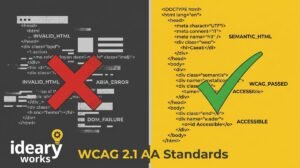
To achieve robust adherence to California digital accessibility law, development teams must strictly follow the Web Content Accessibility Guidelines version 2.1 or 2.2 AA standards. This requires a structural mindset that prioritizes semantic HTML over generic containers, ensuring that every interactive element provides clear programmatic context. For example, utilizing native button elements rather than generic division tags guarantees that keyboard navigation functions as intended without complex script interventions. When raw HTML is insufficient, developers must apply Accessible Rich Internet Applications (ARIA) attributes with extreme precision to dictate the behavior of screen readers.
Semantic HTML versus Cosmetic Fixes
The foundation of any accessible digital platform relies entirely on the proper execution of semantic markup within the source code. When a developer utilizes structural tags such as main, nav, or article, the browser automatically constructs a coherent accessibility tree for the end user. This tree translates visual hierarchies into a logical data structure that assistive devices can parse linearly. Relying entirely on visual CSS styling to convey meaning violates core WCAG principles, as it deprives screen reader users of essential navigational landmarks.
Furthermore, modern web engineering requires strict focus management to accommodate users navigating exclusively via keyboard interfaces. When native focus states are stripped away for aesthetic purposes, the site becomes completely inoperable for a significant portion of the population. Restoring the native outline properties within the cascading stylesheets is a fundamental step toward achieving a structurally compliant interface. Engineering teams must prioritize these native behaviors over highly customized designs that break standard DOM interactions.
Strict ARIA Implementation Rules
While ARIA labels are powerful tools for complex web applications, they must be deployed as a secondary measure when native HTML falls short. The first rule of ARIA is to avoid using it if a standard HTML element can achieve the identical structural result. When custom interactive widgets are absolutely necessary, developers must ensure that attributes accurately reflect the real-time state of the Document Object Model. Misapplied ARIA attributes often create more severe barriers than having no attributes at all, severely confusing assistive technologies and trapping keyboard focus.
For instance, incorrectly setting an element’s role to a dialog without properly trapping the keyboard focus inside the modal creates an inescapable loop for screen reader users. True structural compliance demands that developers validate every custom component against the official accessibility API mappings provided by standard consortiums. This level of analytical precision separates professional web engineering from amateur development practices. We audit these specific interactions daily, finding that minor misconfigurations often lead to major accessibility failures and subsequent legal actions.
Financial Incentives: IRS Section 44 Credit
The financial burden of retrofitting an entirely new digital architecture can be substantially mitigated through specific federal tax incentives. The IRS Section 44 Disabled Access Credit allows eligible small businesses to claim a tax credit for expenses incurred while making their operations accessible to individuals with disabilities. This provision explicitly covers the costs associated with website remediation, providing up to five thousand dollars in annual tax relief. By utilizing this credit, organizations can offset the investment required to achieve structural code compliance while simultaneously insulating themselves against predatory lawsuits.
Partnering for Structural Code Integrity
The regulatory environment surrounding digital accessibility will only become more stringent as litigation strategies evolve across the state. Addressing these complex engineering requirements necessitates a partnership with a firm that understands the exact intersection of legal liability and server-side code construction. To protect your enterprise, you should request a comprehensive technical assessment from our engineering team today. We provide transparent, data-driven roadmaps that prioritize foundational accessibility over temporary fixes, ensuring long-term security for your digital assets.
Our engineers meticulously evaluate your Document Object Model, identifying exact failure points that automated scanners routinely miss. If you are ready to eliminate your legal exposure permanently, schedule your free homepage accessibility review to understand the true state of your infrastructure. We partner strictly with organizations that demand analytical rigor and absolute transparency in their software development lifecycles. By choosing a deeply technical approach, you invest in a permanent solution that satisfies both user experience requirements and statutory mandates.
Frequently Asked Questions
Do automated widgets protect against Unruh Act claims?
Automated widgets and one-click plugins offer zero structural protection against formal litigation under the Unruh Civil Rights Act. These tools operate as superficial layers that fail to permanently modify the underlying Document Object Model, which is the exact criteria courts evaluate during technical audits. Relying on these overlays often signals to plaintiffs that the underlying source code remains fundamentally flawed and vulnerable to a lawsuit.
What are the primary targets for ADA demand letters?
Plaintiffs primarily target websites with broken keyboard navigation, missing alternative text for critical images, and forms lacking programmatic labels. These technical failures represent violations of WCAG 2.1 AA standards, which courts universally recognize as the baseline metric for digital inclusion. A comprehensive technical audit is the only reliable method to identify and eliminate these specific structural liabilities before a legal challenge arises.
How does the Ninth Circuit view website accessibility?
The Ninth Circuit Court of Appeals maintains that websites with a strong nexus to a physical location must be fully accessible to users with disabilities. Recent jurisprudence emphasizes that businesses cannot evade responsibility by offering alternative communication methods if their primary digital platform remains structurally inaccessible. To secure a genuine mootness dismissal in this jurisdiction, defendants must present concrete evidence of permanent code remediation.
Can a business claim the IRS Section 44 credit for ongoing maintenance?
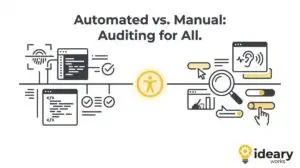
The Internal Revenue Service strictly defines eligible expenses under Section 44 to include the costs of adapting existing digital materials to meet the needs of individuals with disabilities. While initial structural remediation projects clearly qualify, businesses must consult with their financial advisors regarding the application of the credit to ongoing accessibility maintenance. Maintaining compliance is an ongoing technical requirement, as any new code deployment can introduce fresh accessibility barriers if not properly monitored. Structuring your development lifecycle to include automated and manual accessibility testing ensures that your platform remains legally sound over time.