Navigating California ADA Website Compliance Updates
Imagine a customer trying to book a vital medical appointment at a Pasadena clinic, only to find that their screen reader cannot decipher the scheduling calendar. This invisible barrier prevents a real person from accessing healthcare while simultaneously costing the clinic a valuable patient. Understanding California ADA website compliance is no longer just about meeting a set of legal requirements. It is about fostering trust, ensuring functional independence for all users, and maintaining the structural integrity of your digital presence.
To help local business owners build better platforms, we have detailed the latest shifts in digital accessibility standards. This comprehensive guide covers recent legal rulings, the critical flaws of automated solutions, and actionable steps for securing long-term inclusivity. By reviewing these sections, you will learn how native code improvements benefit both your customers and your operational growth. You will also discover how proper structural updates can protect your organization from legal vulnerabilities.
California ADA Website Compliance Demystified
The landscape of California ADA website compliance has shifted significantly over the past year, moving away from vague guidelines toward strict digital parity. State-level rulings now closely mirror the Web Content Accessibility Guidelines, specifically the newly updated WCAG 2.2 AA standards, which serve as the universal benchmark for online inclusion. For Southern California business owners, this means that treating a website like a static digital brochure is no longer sufficient for modern commerce. Your platform must function as an accommodating, universally accessible storefront that welcomes every single visitor with equal ease and respect.
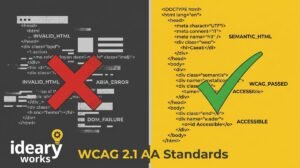
When we talk about digital accessibility at a foundational level, we are referring to the actual HTML code that constructs your web pages. Semantic HTML acts as the architectural skeleton, giving clear instructions to assistive technologies about how to read and navigate your content. If a visually impaired user relies on keyboard navigation to browse a local real estate portal, the underlying code must logically guide them from property listings to contact forms. Ignoring these fundamental structural elements alienates potential clients and leaves the business exposed to unnecessary scrutiny from advocacy groups.
Recent Demand Letter Trends in Southern California
Across Pasadena and the broader Los Angeles area, there has been a noticeable increase in accessibility demand letters targeting specific local industries. Medical practices, boutique retail shops, and real estate agencies are frequently audited by private plaintiffs seeking to enforce state and federal accessibility laws. These letters often highlight basic coding failures, such as missing alternative text for images, unlabelled form fields, or inaccessible navigation menus. Rather than viewing this trend purely through the lens of lawsuit fearmongering, business owners should see it as a clear signal to audit and strengthen their digital infrastructure.
Consider the real-world impact when a user attempts to fill out a contact form to inquire about a legal or medical service. A missing form label means their screen reader simply announces a blank box, offering no context about what information they need to provide. The user is left guessing what data is required, which almost always results in them abandoning the site out of sheer frustration. By proactively addressing these structural flaws, companies can convert a potential legal vulnerability into a distinct competitive advantage in the local market.
The Inherent Dangers of One-Click Widgets
Many business owners are tempted by the false promise of automated accessibility overlays and one-click compliance widgets. These software products are aggressively marketed as instant cures for complex legal issues, claiming to fix deep structural problems with a single line of JavaScript. In reality, these automated tools often create more barriers than they remove for people who rely on specialized screen readers. They apply superficial bandages over broken code, forcing vulnerable users to interact with a clumsy, secondary interface instead of a smoothly functioning website.
We firmly reject these digital shortcuts because they fundamentally disrespect the user experience and fail to provide genuine, equitable accessibility. An overlay software cannot accurately interpret the visual context of a complex photograph or restructure a poorly designed, non-linear navigation menu. By relying on instant magic solutions, businesses do a profound disservice to their customers while maintaining a dangerous false sense of security regarding their legal standing. True digital inclusion requires a steadfast commitment to manual, code-level remediation that prioritizes long-term care over temporary, unreliable illusions.
Translating Technical Standards to Human Experiences
Navigating the technical jargon of web accessibility can feel overwhelming, but every standard ultimately connects back to a tangible human experience. Take ARIA roles, for example, which are specialized HTML attributes used to describe complex interactive web elements to assistive technologies. If a restaurant features a dynamic pop-up window for its daily specials, ARIA roles tell the screen reader that a new window has appeared and provide precise instructions on how to close it. Without this vital code, the user is trapped on the page, unable to read the menu or complete their online order.
Color contrast is another critical component of the WCAG 2.2 AA standard that directly impacts daily usability for millions of people. Text must stand out clearly against its background so that individuals with low vision or color blindness can read the content without straining their eyes. Imagine trying to decipher light gray text on a white background while standing outside in the bright California sun; it is an incredibly frustrating experience for absolutely anyone. Correcting these contrast ratios is a precise, measurable adjustment that immediately enhances the overall readability of your site for your entire audience.
Key Updates in WCAG 2.2 AA Requirements
The transition from older standards to WCAG 2.2 AA introduced several crucial updates designed to aid users with cognitive and motor disabilities. One major addition focuses on target size, requiring that clickable elements like buttons and text links are large enough to be easily activated without precise mouse movements. For a local Pasadena bakery offering online ordering, this means ensuring that mobile users can easily tap the add to cart button without accidentally clicking a neighboring link. This simple adjustment prevents user errors and creates a frictionless checkout process that boosts overall sales.
Another significant update involves focus appearance, which mandates that the current item selected via keyboard navigation is clearly highlighted on the screen. Users with limited mobility often rely on the keyboard to move through a webpage, and they need a highly visible indicator to know exactly where they are at all times. If a website lacks proper focus states, the user becomes lost in a maze of invisible links and buttons. Implementing strong visual focus indicators is a fundamental act of digital hospitality that demonstrates your respect for every visitor.
Building Structural Integrity Through Manual Audits
Building a robust, universally compliant website requires the same level of calm, methodical precision as constructing a physical commercial building. At Ideary Works LLC, we champion the rigorous process of comprehensive manual audits to identify and resolve deep-seated coding errors. Our accessibility experts systematically evaluate your website using the same assistive technologies and screen readers that your customers rely on every day. This thorough, hands-on approach ensures that every interactive element, from complex dropdown menus to embedded video players, functions flawlessly for all users without exception.
The meticulous process of native structural code remediation involves going directly into the backend of your website to correct the foundational HTML, CSS, and JavaScript. This is not a superficial, quick-fix patch; it is a permanent upgrade to your digital infrastructure that significantly improves your search engine optimization and overall site performance. Search engines inherently favor websites that feature clean, semantic code and clear, logical navigation pathways. By investing in proper structural improvements, you enhance your organic visibility in search results while simultaneously providing a demonstrably superior user experience.
Offsetting Accessibility Costs with Tax Credits
Making the essential commitment to digital accessibility does not have to be an overwhelming financial burden for small and medium-sized enterprises in California. The federal government actively encourages these improvements by offering the IRS Section 44 Disabled Access Credit, which helps eligible businesses offset the costs associated with upgrading their platforms. This valuable credit can cover a significant portion of the out-of-pocket expenses related to professional manual code audits, thorough remediation, and ongoing compliance maintenance. Utilizing this financial tool allows you to prioritize inclusive design while maintaining a highly secure and healthy operational budget.
Investing in true accessibility is ultimately an investment in the long-term viability, reputation, and reach of your growing business. When you ensure that your digital storefront is completely open to everyone, you build a lasting foundation of customer trust that pays dividends for years to come. We invite you to partner with a reliable, transparent agency that explains technical issues in simple, everyday language and consistently prioritizes your lasting structural integrity. Taking proactive steps today will secure your digital presence and welcome a broader audience to your brand.
Frequently Asked Questions
Many business owners wonder if small, local companies are genuinely at risk for digital accessibility lawsuits in Southern California. The reality is that legal requirements apply to businesses of all sizes, and a proactive approach is always more cost-effective than retroactive legal defense. The timeline for remediation depends entirely on the complexity of the site, which is why a thorough manual audit is the necessary first step to understanding your specific structural needs.
Finally, clients frequently inquire if they need to redesign their entire website to achieve proper compliance. In most cases, skilled developers can remediate the existing codebase without altering the visual branding or requiring a complete platform overhaul. The focus is on fixing the underlying semantic structure so that assistive technologies can interpret the content correctly. This precision-driven methodology ensures your digital presence becomes fully inclusive while preserving the familiar look and feel your current customers already trust.