Analyzing Accessibility Overlay Removal by Major Brands
The trend of accessibility overlay removal has accelerated across national and California-based brands as corporate legal teams recognize the structural limitations of automated compliance tools. We have observed a significant shift where organizations abandon one-click plugins in favor of native code remediation, driven by surging Unruh Civil Rights Act litigation and impending 2026 DOJ Title II updates. This analytical review examines why major retailers are stripping these widgets from their digital infrastructure and investing in foundational Document Object Model adjustments. Our engineering team at Ideary Works views this transition as a necessary return to technical rigor, ensuring websites meet objective WCAG 2.2 AA requirements.
The Legal Catalyst for Compliance
The California legal landscape has become notoriously unforgiving for businesses relying on superficial accessibility widgets to satisfy federal and state mandates. Plaintiff attorneys frequently target websites utilizing automated overlays because these tools fail to resolve underlying structural barriers, leading to a wave of mootness dismissals being denied in court. The forthcoming 2026 DOJ Title II updates further cement the necessity of verifiable code-level accessibility, signaling to the private sector that governmental expectations are shifting toward foundational compliance. Consequently, legal counsel for major brands are advising immediate accessibility overlay removal to mitigate severe financial exposure under the ADA.
To further contextualize the trend of accessibility overlay removal, we must examine the specific legal mechanisms driving this corporate behavior in California. When a plaintiff files a lawsuit citing Unruh Civil Rights Act violations, businesses utilizing overlays attempt to claim mootness by arguing the widget has resolved the barrier. However, federal and state judges consistently reject these defenses, noting that the temporary nature of a JavaScript plugin does not constitute a permanent structural remedy to the underlying source code. Because these widgets can be disabled or fail to load on certain networks, courts recognize that the foundational digital architecture remains inherently discriminatory.
Failures of Automated Plugins
To understand the industry shift toward native remediation, we must examine the technical mechanisms by which these automated scripts operate within the browser environment. Overlays attempt to modify the DOM on the fly using JavaScript, which introduces significant latency and frequently conflicts with the advanced parsing algorithms of modern screen readers. Because these plugins cannot reliably interpret the contextual meaning of visual elements, they generate incorrect ARIA labels that confuse rather than assist users navigating via keyboard input. This fundamental engineering flaw demonstrates why a cosmetic layer cannot substitute for deliberate structural planning during the initial development phase.
Overlays Disrupt the DOM
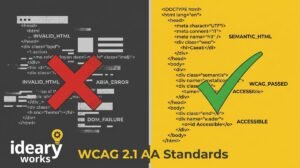
When a screen reader parses a webpage, it relies on an accessibility tree constructed directly from the raw semantic HTML provided by the server. Overlays intercept this process, injecting dynamic attributes that overwrite necessary native semantics and create trapped focus states for keyboard users. For example, an automated script will append an arbitrary ARIA role to a non-semantic generic container, forcing the assistive technology to announce a button where no actionable event listener actually exists. This mismatch between visual presentation and programmatic behavior creates an insurmountable barrier for disabled users, prompting the ongoing wave of accessibility overlay removal across the enterprise sector.
Keyboard Navigation Issues
Another technical failure driving this industry shift involves the catastrophic impact overlays have on standard keyboard navigation protocols. Power users and individuals utilizing adaptive switches rely on predictable focus management, expecting the browser to logically progress through actionable elements based on the raw HTML structure. Overlays intercept keyboard events to force custom focus rings or trap the user within proprietary menus, breaking the native functionality of the operating system and the browser itself. Removing these disruptive scripts restores the baseline accessibility provided by modern web standards, allowing our developers to implement precise focus indicators directly within the CSS layer.
Case Study Metrics on Removal
Analyzing recent enterprise remediation projects reveals a consistent pattern among California retail brands that initially deployed automated widgets as a stopgap measure. In our technical audits of several national e-commerce platforms, we documented that overlay implementation actually increased the volume of WCAG violations reported by manual testing protocols. Upon executing full accessibility overlay removal, these organizations required comprehensive code overhauls to address the severe technical debt masked by the third-party scripts. The transition to native compliance not only resolved their immediate litigation vulnerabilities but also resulted in measurable improvements in overall site performance and search engine indexability.
Requirements for WCAG Compliance
True digital equity requires a structural mindset that treats accessibility as a core engineering specification rather than a post-production afterthought. Meeting WCAG 2.1 and 2.2 AA criteria demands precise manipulation of HTML elements to ensure that all interactive components are programmatically determinable by assistive technologies. We approach web development with strict adherence to semantic standards, ensuring that every input field, navigation menu, and modal dialog possesses the correct native markup before relying on supplemental ARIA attributes. This methodology guarantees that the code inherently supports accessible user experiences without the unpredictable variable of third-party JavaScript execution.
Engineering Semantic HTML
Consider the common architectural failure of utilizing generic elements for critical interactive controls, which overlays routinely fail to correct. A structurally sound approach utilizes native button tags for on-page actions, natively inheriting keyboard focus and enter-key execution without requiring redundant ARIA roles. Conversely, when developers use a generic div tag for a button, they must manually assign tabindex, role, and keydown event listeners to simulate standard behavior. Our engineers eliminate these liabilities by enforcing strict semantic HTML standards during the build process, rendering automated remediation attempts obsolete and technically inferior.
Correcting ARIA Misapplications
The widespread misuse of Accessible Rich Internet Applications attributes by automated tools represents a significant engineering hazard that requires manual intervention. Overlays apply redundant or conflicting ARIA roles, such as adding an aria-label to a native element that already possesses discernible text, which causes screen readers to announce the element twice. Resolving these redundancies requires a deep understanding of the accessibility tree, stripping away unnecessary attributes and relying on native HTML semantics whenever possible. We adhere to the fundamental rule of ARIA, which states that if a native HTML element provides the required semantics, it must be used instead of a custom attribute solution.
Advanced Structure Validation
A critical component of native remediation involves mapping the logical flow of the Document Object Model to ensure logical reading orders for screen readers. Automated tools lack the spatial awareness required to understand how visual CSS positioning alters the intended sequence of information, leading to disjointed auditory experiences for visually impaired users. By meticulously restructuring the DOM hierarchy, we guarantee that the programmatic reading sequence aligns perfectly with the visual layout, satisfying WCAG criteria for meaningful sequence and focus order. This level of technical synchronization cannot be achieved through superficial script injections, which is why engineering teams mandate accessibility overlay removal across enterprise environments.
IRS Section 44 Tax Credit
While the initial capital expenditure for native code remediation exceeds the monthly subscription cost of a plugin, the long-term financial arithmetic heavily favors foundational web development. Businesses that undergo accessibility overlay removal eliminate the recurring licensing fees associated with third-party widgets while simultaneously reducing their exposure to costly Unruh Civil Rights Act settlements. Furthermore, eligible businesses can leverage the IRS Section 44 Disabled Access Credit, which provides a tax offset of up to five thousand dollars for expenditures related to ADA compliance improvements. This federal incentive transforms necessary structural engineering into a sound financial strategy, allowing companies to invest in permanent digital infrastructure upgrades.
Performance and SEO Benefits
Beyond the immediate legal protections, stripping third-party compliance widgets from a codebase yields substantial improvements in core web vitals and server response times. Accessibility overlays are notoriously heavy scripts that block the main thread during page load, negatively impacting critical performance metrics that search engines use to determine ranking positions. When organizations execute an accessibility overlay removal, they simultaneously shed unnecessary JavaScript payload, resulting in faster rendering times and a significantly improved user experience for all visitors. The native semantic HTML that replaces the overlay logic provides search engine crawlers with highly structured and machine-readable data, organically boosting the discoverability of the domain.
Securing Your Infrastructure
Transitioning away from automated solutions requires a methodical approach to web engineering that most internal marketing departments are not equipped to handle independently. We provide the structural expertise necessary to rewrite legacy codebases without disrupting the existing visual branding or backend integrations that power your commercial operations. Our auditing process meticulously catalogs every DOM anomaly and ARIA misconfiguration, providing corporate leadership with a transparent and data-driven assessment of their actual legal exposure. If you are ready to secure your digital assets, you can instruct us to maintain my website permanently, escaping the endless cycle of superficial patches and mounting litigation threats.
Navigating the complexities of ADA litigation and WCAG standards requires a partner capable of executing precise and verifiable structural modifications. We invite technical directors to test my website to assess the depth of your technical debt and outline a concrete roadmap for compliance. If your corporate counsel has recommended abandoning automated scripts, you can hire us to fix my website while stabilizing your core DOM architecture. You can easily transition to native remediation by partnering with our engineers to ensure long-term legal protection and an optimal user experience for all visitors.