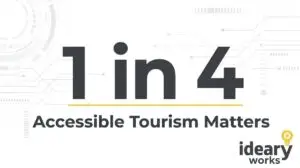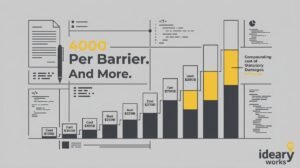
The landscape of digital business in Southern California has fundamentally shifted under the weight of escalating and aggressive litigation. Businesses across Los Angeles and Pasadena are experiencing an unprecedented surge in legal demand letters regarding ADA website compliance failures. This hostile legal environment stems largely from the enforcement mechanisms embedded within the Unruh Civil Rights Act, which allows plaintiffs to claim substantial statutory damages for digital inaccessibility. We have observed that many organizations attempt to mitigate this severe risk through superficial means, ignoring the foundational engineering required for genuine accessibility.
True mitigation requires a comprehensive understanding of both federal mandates and the specific technical criteria outlined in the Web Content Accessibility Guidelines, commonly known as WCAG 2.1 and 2.2 AA. The impending 2026 Department of Justice Title II updates further solidify the regulatory expectation that web accessibility must be structurally sound rather than merely cosmetically applied. Organizations that fail to recognize this critical shift are positioning themselves for inevitable, costly legal exposure. We approach this systemic challenge through the lens of structural engineering, treating digital accessibility as a core architectural requirement rather than a secondary cosmetic afterthought.
Why Overlays Fail ADA Website Compliance Standards
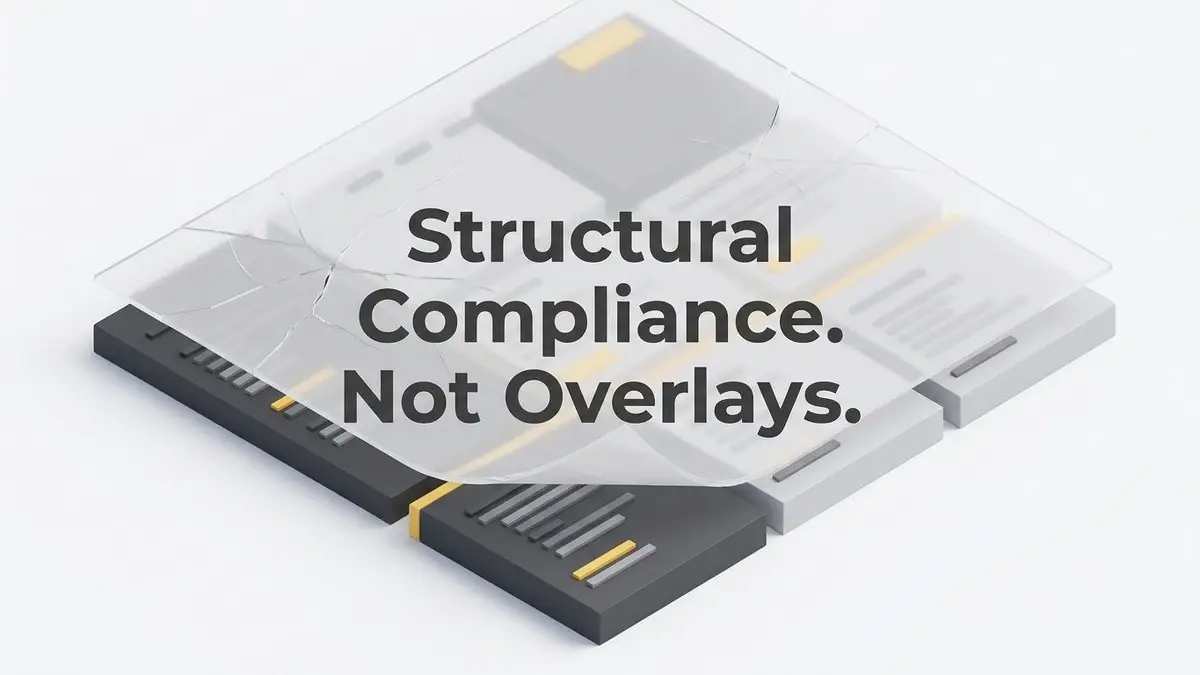
In response to the rising tide of accessibility lawsuits, a massive industry of automated overlay widgets has emerged with false promises of instant legal protection. These one-click plugins claim to artificially remediate accessibility barriers by injecting temporary JavaScript code directly over the existing website interface. However, these automated tools categorically fail to achieve ADA website compliance because they do not alter the underlying Document Object Model, which is the exact foundational structure that assistive technologies rely upon for navigation. When businesses deploy these superficial widgets, they manufacture a false sense of security while leaving their digital properties entirely vulnerable to targeted plaintiff litigation.
To fully comprehend the technical failure of automated overlays, we must examine the precise mechanical interaction between a website and specialized assistive technologies. Screen readers and braille displays parse the raw semantic HTML of a webpage to interpret complex relationships between different structural elements. When an overlay attempts to fix a missing label or an illogical heading hierarchy dynamically, it often creates conflicting instructions that severely disorient the disabled end user. This technical dissonance directly violates the predictable navigation requirements stipulated within the stringent WCAG 2.2 AA framework, rendering the remediation effort entirely useless.
Analyzing DOM Structure and Screen Reader Mechanics
The true foundation of an accessible digital experience is built entirely upon strict adherence to semantic HTML principles and proper DOM sequencing. When developers use the correct HTML tags for their intended purposes, such as utilizing native button elements for discrete actions and anchor tags for navigation, they inherently provide the necessary context to assistive technologies. We require our engineering teams to construct highly predictable DOM structures because this methodical approach guarantees that screen readers can accurately announce interactive elements. A well-structured document hierarchy eliminates the frustrating ambiguity that frequently traps keyboard-only users in inescapable, cyclical navigation loops.
Consider the highly specific practical application of Accessible Rich Internet Applications, widely known as ARIA attributes, within a complex, modern web interface. ARIA labels are specifically designed to bridge the functional gap when native HTML semantics fall short, providing supplementary context to screen readers regarding dynamic content changes. However, when automated widgets indiscriminately apply arbitrary ARIA attributes to random interface elements, they frequently override native semantics and severely degrade the overall user experience. True code-level compliance demands that developers manually verify the explicit purpose of every single ARIA tag to ensure it accurately reflects the interactive state of the user interface.
The Unruh Civil Rights Act and Legal Ramifications
The current litigation environment in California operates under highly unique statutory conditions that heavily penalize structural non-compliance and digital negligence. The Unruh Civil Rights Act treats violations of the federal Americans with Disabilities Act as state civil rights violations, explicitly allowing plaintiffs to pursue significant statutory damages per isolated incident. Plaintiff law firms frequently utilize automated crawling software to rapidly identify missing semantic markup or flawed DOM structures across thousands of business websites simultaneously. This systematic, volume-based approach to litigation dictates that relying on temporary script fixes provides absolutely no reliable defense against an organized, well-funded legal campaign.
A critical concept within this specific legal framework is the judicial doctrine of mootness dismissals, which occurs when a defendant permanently remediates the accessibility barriers before a trial concludes. State and federal courts have consistently ruled that automated overlay widgets do not qualify for mootness dismissals because their superficial nature means the underlying architectural barriers still exist in the source code. To achieve a valid, legally recognized mootness defense, a business must demonstrate permanent, structural changes to the website code that guarantee ongoing, uninterrupted access for disabled users. We engineer websites from the ground up specifically to provide this necessary level of undeniable, legally defensible permanence.
Implementing Structural Code Compliance Protocols
Achieving true legal protection requires abandoning cosmetic fixes entirely in favor of foundational web development practices that prioritize unwavering structural integrity. Our specific technical methodology closely mirrors the mathematical precision of structural engineering, ensuring every component of a digital property is rigorously tested against precise WCAG 2.2 AA success criteria. This exhaustive process involves manual keyboard navigation testing, detailed screen reader behavioral analysis, and deep audits of the website DOM to verify semantic continuity across all breakpoints. We view this meticulous process not merely as a cumbersome legal burden, but as a fundamental standard of modern web engineering that elevates the overall quality and performance of the platform.
The absolute most effective method to eliminate litigation risk is to completely reconstruct the digital property using validated, inherently accessible code architectures. Our Build and Launch custom WordPress service is specifically designed to deliver this exact level of structural certainty for businesses navigating the complex California legal landscape. By developing custom themes from scratch without relying on bloated, inaccessible page builders, we maintain absolute control over the raw HTML output and ensure precise semantic relationships between all interface elements. This secure, legally compliant alternative guarantees that the final digital product will natively support all necessary assistive technologies without the need for external, fragile plugins.
Offsetting Costs via the IRS Section 44 Tax Credit
Many organizations unfortunately delay essential web remediation projects due to the perceived heavy financial burden of custom, accessibility-focused software engineering. Fortunately, the federal government actively incentivizes proactive accessibility improvements through the specific Disabled Access Credit outlined in IRS Section 44. This highly beneficial tax provision allows eligible small businesses to claim a substantial non-refundable credit for expenses directly incurred while bringing their digital operations into strict compliance with the Americans with Disabilities Act. By leveraging this established financial mechanism, businesses can significantly offset the initial capital investment required to construct a structurally accessible, legally defensible website.
It is crucial to understand that the tax credit specifically covers legitimate, permanent accessibility remediations, which clearly excludes the recurring monthly subscription fees associated with failed automated overlays. When forward-thinking businesses invest in foundational code reconstruction, they are purchasing a permanent digital asset that directly qualifies under the rigorous, exacting definitions of the federal tax code. We systematically guide our client organizations through the complex technical documentation process, providing the detailed structural compliance reports necessary to thoroughly substantiate these specific tax claims. This strategic financial planning transforms an unexpected legal liability into a highly manageable, federally subsidized investment in fundamental business infrastructure.
Securing Your Digital Future with Technical Precision
The complex digital accessibility landscape will undeniably continue to evolve, with legal standards becoming increasingly stringent as modern web technology advances. The impending 2026 Department of Justice Title II updates will firmly set a strict new baseline for digital inclusion, placing further pressure on private sector organizations to aggressively elevate their technical engineering standards. By adopting a proactive, engineering-first mentality today, businesses can successfully insulate themselves against future statutory shifts and the inevitable evolution of specialized assistive technologies. We remain deeply committed to educating the web development industry about the absolute necessity of this structural precision in an era of heightened legal and regulatory scrutiny.
Cosmetic widgets, automated plugins, and temporary script injections will always fail to provide the enduring structural stability required to withstand intense, professional legal audits. The singular reliable defense against the modern, surging wave of digital accessibility litigation is a mathematically precise, fundamentally accessible code base that prioritizes native semantic HTML. We strongly encourage organizations to Get my free website audit to accurately understand the true technical state and legal vulnerability of their current digital platforms. By taking decisive, informed action now, local businesses can firmly secure their technological infrastructure and provide a genuinely equitable experience for all human users.
Achieving true digital accessibility consistently demands a specialized web partner who deeply understands the intricate mechanical relationship between raw code structures and human interface guidelines. Our rigorous structural approach to digital compliance entirely eliminates the guesswork, providing modern organizations with a highly clear path toward permanent legal protection and technological superiority. You can initiate this critical structural transformation and Create my new website by consulting directly with our seasoned engineering leadership today. Together, we will meticulously construct a resilient digital environment that perfectly reflects the highest possible standards of technical excellence and uncompromising civil rights compliance.